A personal beginning close to home
Hafenlohr Valley in the Spessart is a place where water, forest, and silence shape the landscape rather than landmarks.
My photographic journey through Europe began in the ancient oak forests of the Spessart.
Yet in the weeks that followed, I never crossed the borders of the region. The more deeply I immersed myself in landscapes, light, and potential motifs, the clearer it became that many of the most mysterious places were not far away at all — they were right on my doorstep.
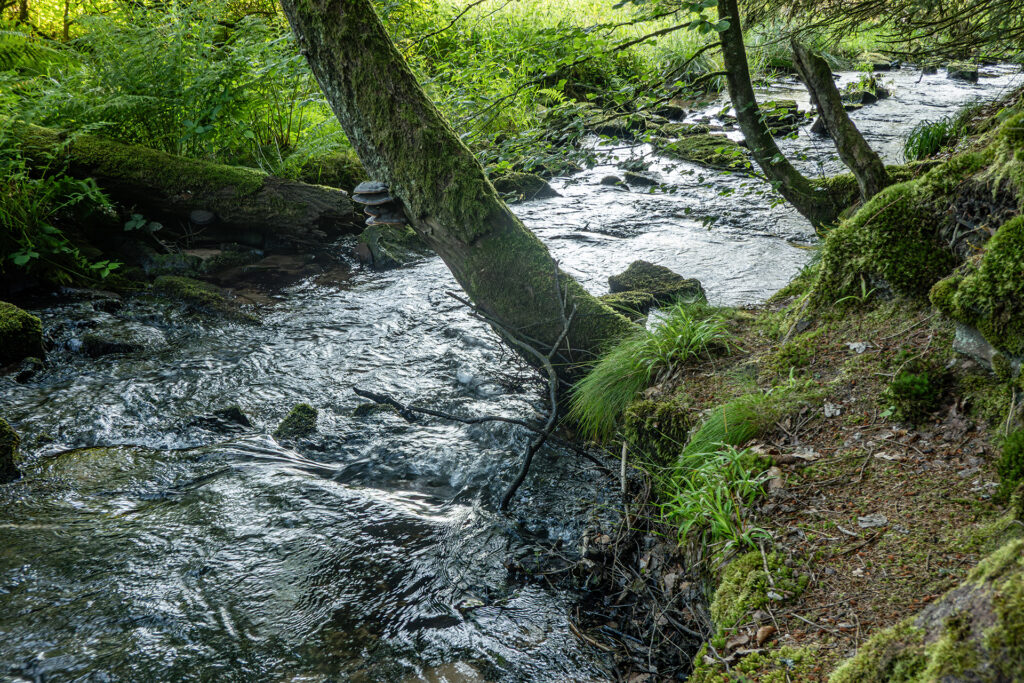
The Hafenlohr Valley became one of those places.
A valley that is not loud. Not spectacular at first glance. But shaped by quiet transitions, slow rhythms, and subtle details that reveal themselves only with time.
Rothenbuch and the source of the Hafenlohr
The Hafenlohr rises in the very center of my hometown, Rothenbuch. From here, it begins its journey through dense forests, wetlands, and floodplain landscapes. Large sections of this valley are protected nature reserves today.
How seriously this protection is taken becomes clear when looking at recent history: the Hafenlohr Valley was once threatened by plans for a water reservoir. After years of debate and resistance, the project was abandoned — for reasons that went far beyond environmental concerns alone. The valley remained.
The community mill – traces of human history
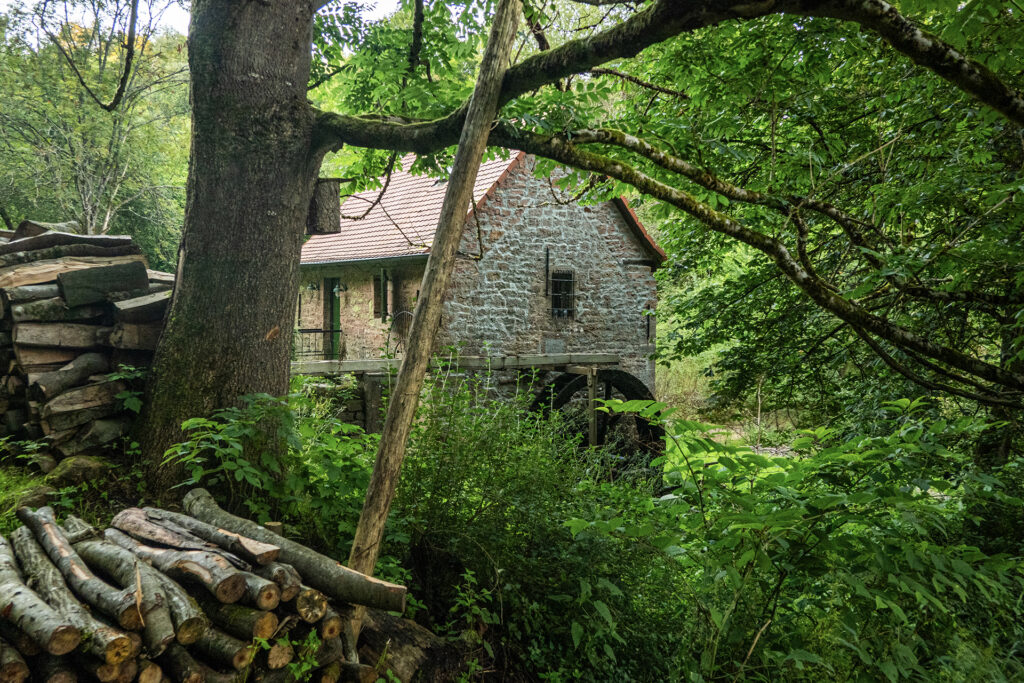
In the upper stretches of the Hafenlohr, not far from Rothenbuch, stands the community mill, built in 1742.
It serves as a quiet reminder that this landscape has never been untouched, but shaped, used, and respected over centuries. For me, it marks a subtle transition between cultural history and natural processes — a place where human presence blends into the surroundings rather than dominating them.
Along the Hafenlohr – from stream to river
With a length of nearly 27 kilometers, the Hafenlohr eventually flows into the Main near the town that shares its name.
Along the way, its character constantly changes: from a gentle, almost inconspicuous stream in its upper reaches to a calm river in the lower valley.
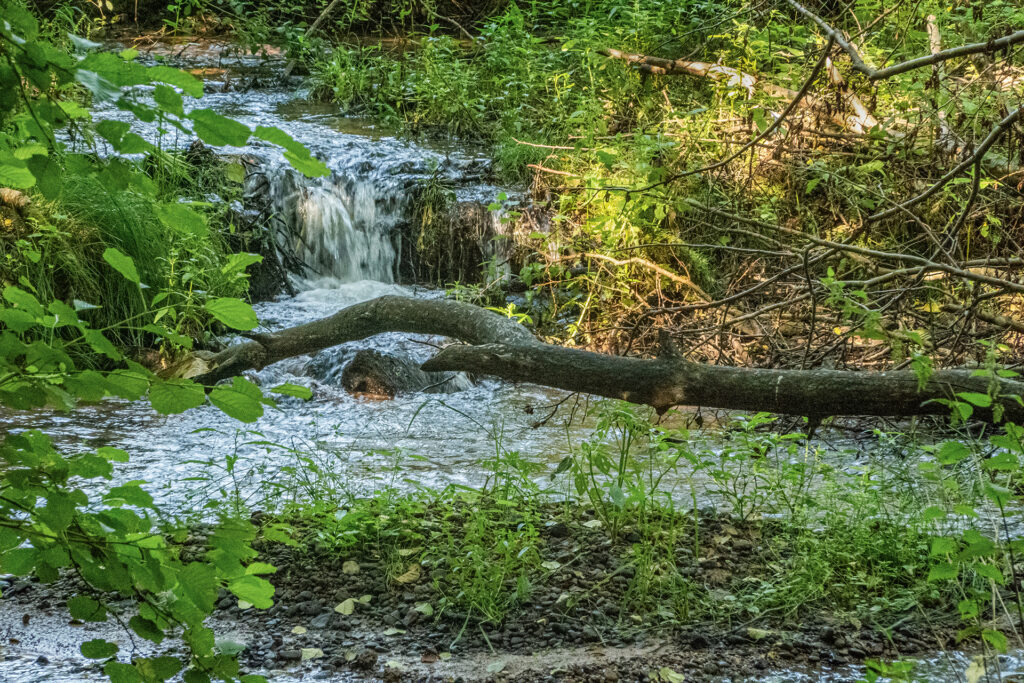
These transitions are what fascinate me photographically. No single motif defines the experience. Instead, the valley reveals itself through rhythm, repetition, and gradual transformation.
Boardwalk and wetlands
One of the most distinctive sections is the wooden boardwalk that crosses not only the Hafenlohr itself, but also an adjacent wet meadow.
Here, movement slows naturally. Attention shifts downward — to the texture of the wood, the water beneath, and the traces left in the soft ground.
This area is home to beavers. Their presence is rarely dramatic, but unmistakable: gnawed trunks, altered watercourses, and subtle signs of ongoing change.
Morning encounters in the forest
Those who walk the valley early in the morning experience it differently.
In the deep forests along the Hafenlohr, encounters with wild boar, foxes, and deer are possible. Often they are brief — silhouettes between trees, movement at the edge of vision.
Photographically, these are not quick images. They demand patience — or they do not happen at all.
Lower valley, water buffalo, and open floodplains
Further downstream, the landscape opens. Water buffalo have been introduced here and now graze the floodplains year-round. Their calm presence, combined with the wide meadows and slow-moving water, gives this section an almost archaic atmosphere.
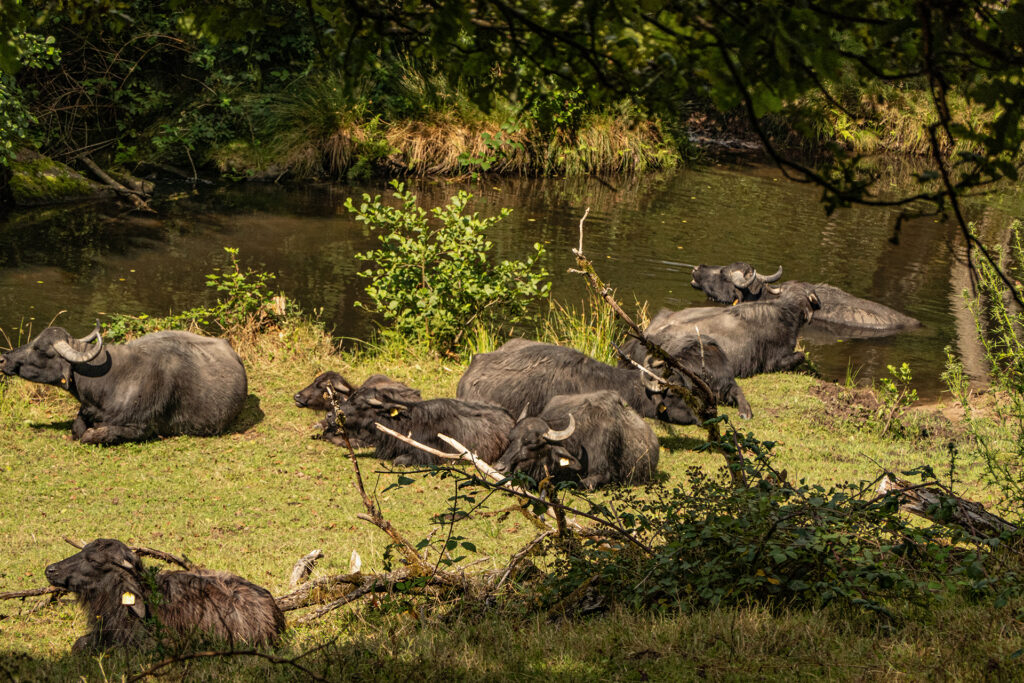
It is a place where landscape and animal life feel deeply connected.
Diana ponds and the floodplain forest near Erlenfurt
The Diana ponds and the surrounding floodplain forest near Erlenfurt often form the quiet conclusion of an exploration.
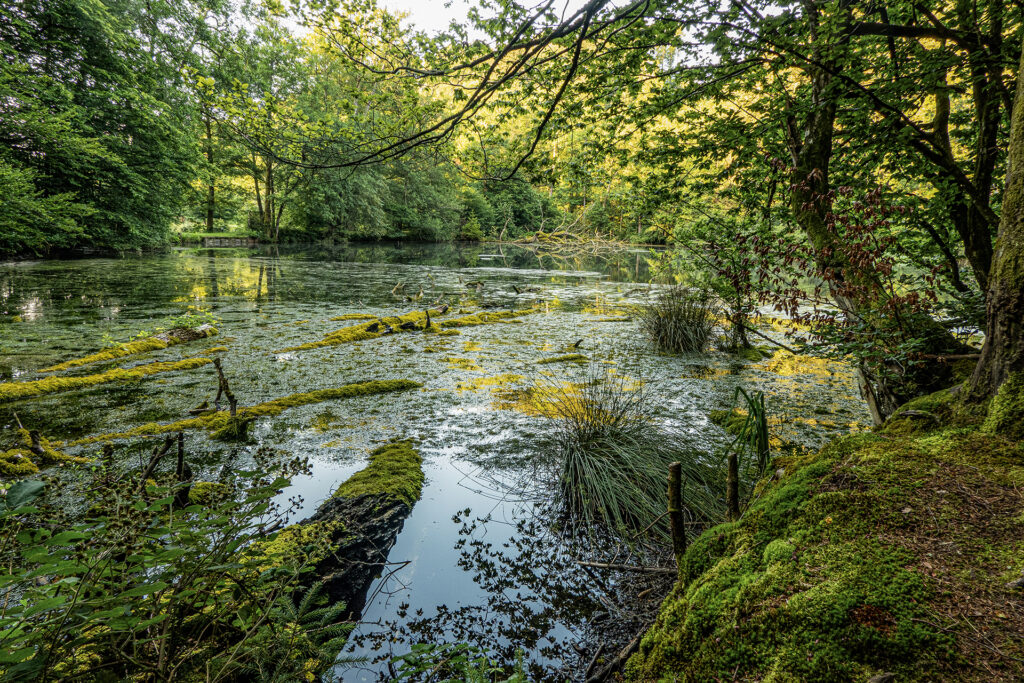
Still water surfaces, reflections, deadwood, and dense vegetation create an atmosphere defined more by mood than by individual motifs. These are places where one tends to stay longer than intended.
Hafenlohr Valley – a beginning
The Hafenlohr Valley is part of my home.
Together with the oak forests of the Spessart, it marks the true beginning of my journey through Europe — not as a geographic departure, but as a photographic one.
Experiencing the Hafenlohr up close – selected access points
Walking through the Hafenlohr Valley Spessart feels less like exploring a destination and more like returning to something familiar.
The Hafenlohr is not always easy to see. Roads and forest tracks often keep their distance, and long stretches remain hidden behind dense woodland.
Still, there are a few carefully chosen access points that allow you to experience the river at close range — visually, acoustically, and atmospherically.
Almich Dam – entering the Hafenlohr Valley
At the Almich Dam, the nature reserve of the Hafenlohr Valley begins. Coming from Rothenbuch, take the turn toward Weibersbrunn and cross the dam, which already offers an open view into the valley.
Immediately after crossing, it is possible to park on the right-hand side of the road near a forest track merging into the street.
Coordinates: N49° 56.254′ E9° 24.226′
On the opposite side, a narrow path branches off. It crosses the Steinbach stream and then leads into a wider forest road running parallel to the Hafenlohr.
This narrow section, about 400 meters long, is the most atmospheric part of the walk. The wider forest road that follows is calm and relaxing, but usually lies 50 to 100 meters away from the river, with only limited views of the water.
Boardwalk and wetlands – close to the river
One of the most immersive sections of the valley begins near the boardwalk. Although the parking area is not clearly marked, there is sufficient space to leave a car.
Parking coordinates: N49° 56.672′ E9° 26.122′
From here, a signposted path leads to the boardwalk, crosses the Hafenlohr, and continues over a wet meadow. It then turns into a narrow trail running close to a side arm of the river.
This stretch, roughly 400 meters long, offers one of the most intense impressions of both the river and the surrounding valley.
The trail eventually meets a wider forest road leading toward the guesthouse and restaurant Knuck, remaining relatively close to the Hafenlohr at about 30 meters distance.
Near the Lichtenau sawmill, shortly before reaching the restaurant, a path branches off to the right toward Lichtenau. It crosses the river once more, opening another beautiful view of the valley.
Parking is available in Lichtenau near a popular excursion restaurant.
Lichtenau coordinates: N49° 56.950′ E9° 27.175′
Floodplain forest near Erlenfurt
Another rewarding section lies within the floodplain forest near Erlenfurt. Parking requires finding a suitable spot along the roadside.
Near the coordinates below, a path branches off and crosses the Hafenlohr after approximately 200 meters. A small pond marks the entrance to the floodplain forest, from where paths lead deeper into the woodland on both sides.
Access point coordinates: N49° 56.950′ E9° 27.175′
Shortly before Erlenfurt, a trout farm offers fresh trout for purchase.
Trout farm coordinates: N49° 56.861′ E9° 28.285′
Diana ponds and water buffalo
Near the Diana forester’s lodge, there is an unmarked parking area with ample space, even for larger vehicles.
Parking coordinates: N49° 56.436′ E9° 29.182′
Following the forest road from here, a scenic viewpoint overlooking the Diana ponds is reached after about 500 meters. The combination of open water, forest edges, and quiet paths creates a particularly calm atmosphere.
Water buffalo can often be encountered near the parking area itself.
Water buffalo near Windheim
Further downstream toward Windheim, water buffalo may also be seen grazing along the valley. Shortly before reaching Windheim, it is possible to park near the following location:
Parking coordinates: N49° 53.208′ E9° 34.214′
From there, cross the road over the Hafenlohr and take the forest track branching off to the left. It runs parallel to the river.
After a walk of around three kilometers, encounters with the water buffalo are possible — though never guaranteed.